Transitioning to Flatbed: What You Need to Know
-
Mar 23, 2026
-
232
Switching from hauling standard dry vans to flatbed (open deck) trailers is one of the most reliable ways to increase your earning potential in the trucking industry. Flatbed drivers are consistently in high demand because the job requires serious physical stamina, mathematical precision, and an unyielding commitment to safety. If you are preparing to make the leap into open deck freight, there is a steep learning curve you must be ready to conquer.
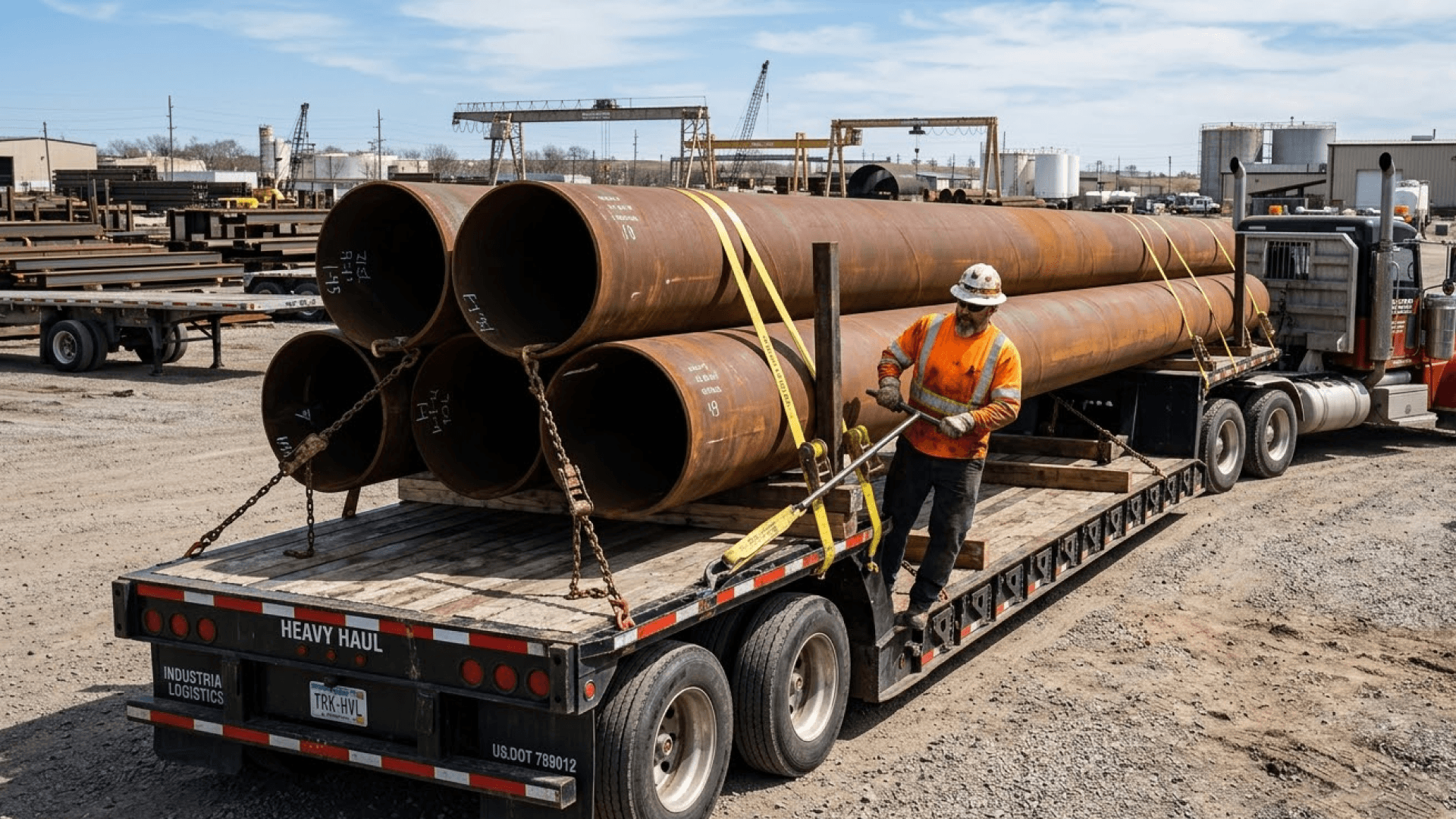
1. The Mathematics of Cargo Securement Unlike hauling a box trailer where the walls contain the freight, on a flatbed, your securement is the only thing preventing a multi-ton disaster. You must master the Federal Motor Carrier Safety Administration (FMCSA) cargo securement rules. You will need to understand Working Load Limits (WLL). For example, if you are hauling a 40,000-pound steel coil, your combined WLL of all tie-downs must equal at least 50% of the cargo's weight (20,000 lbs).
You will constantly choose between chains, binders, and synthetic webbing straps depending on the freight. You must also religiously use edge protectors; a sharp piece of structural steel can slice through a 4-inch strap in miles, leading to catastrophic load shifts.
2. The Physical Toll of Tarping Let’s talk about the hardest part of the job: tarping. Tarping a load is a severe physical workout. A standard lumber tarp can weigh up to 120 pounds. You will be expected to lift, unroll, and bungee these massive tarps in high winds, pouring rain, and freezing snow.

Investing in high-quality personal protective equipment (PPE) is non-negotiable. Slip-resistant steel-toe boots, heavy-duty Kevlar-lined gloves, and a good hard hat will save your life. Tarping isn't just about keeping the customer's drywall or machinery dry; it's about aerodynamics and preventing road hazards from loose debris.
3. Safety Checks and Mindset The FMCSA requires you to inspect your cargo within the first 50 miles of beginning your trip, and then every 150 miles or 3 hours (whichever comes first). This means pulling over, grabbing your winch bar, and physically checking the tension on every single strap and chain. Freight settles as you drive over bumps, and a strap that was tight at the shipper can become dangerously loose an hour later.
Flatbedding offers higher Rate Per Mile (RPM) and a genuine sense of pride. You aren't just bumping docks; you are a specialized professional hauling the infrastructure that builds the country. Respect the freight, double-check your math, and never rush the securement process.
Related Blog Posts


Popular Posts
-
 The Art of Negotiating with Dispatchers Apr 16, 2026
 -
 Dry Van vs Reefer: Choosing Your Freight Path Mar 28, 2026
 -

-
 The Ultimate Guide for Beginner Freight Brokers Apr 06, 2026
 -
 The Guide to a Stress-Free DOT Inspection Mar 31, 2026